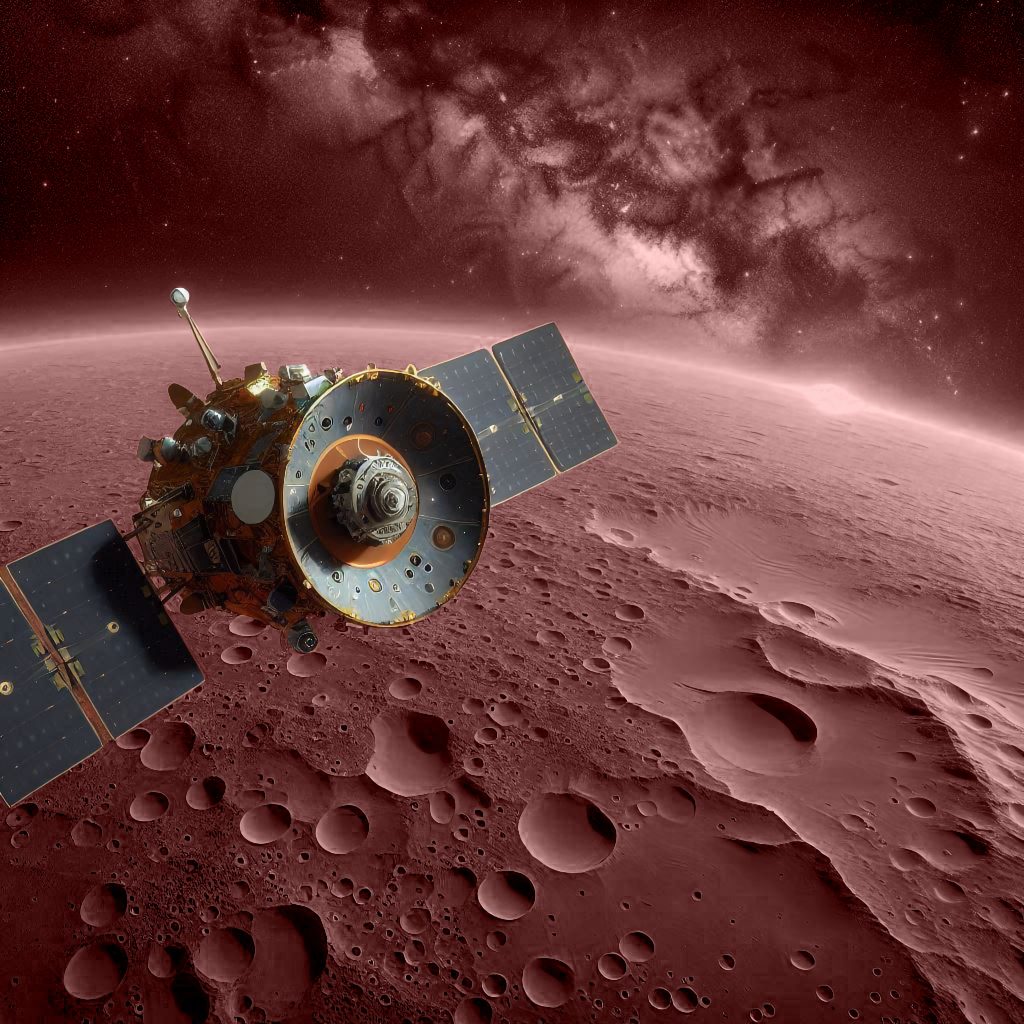
Viking 1 was the first of two spacecraft, along with Viking 2, each consisting of an orbiter and a lander, sent to Mars as part of NASA’s Viking program. The lander touched down on Mars on July 20, 1976, the first successful Mars lander in history. Viking 1 operated on Mars for 2,307 days (over 61⁄4 years) or 2245 Martian solar days, the longest extraterrestrial surface mission until the record was broken by the Opportunity rover on May 19, 2010. Following launch using a Titan/Centaur launch vehicle on August 20, 1975, and an 11-month cruise to Mars, the orbiter began returning global images of Mars about five days before orbit insertion. The Viking 1 Orbiter was inserted into Mars orbit on June 19, 1976, and trimmed to a 1,513 x 33,000 km, 24.66 h site certification orbit on June 21. Landing on Mars was planned for July 4, 1976, the United States Bicentennial, but imaging of the primary landing site showed it was too rough for a safe landing. The landing was delayed until a safer site was found, and took place instead on July 20, the seventh anniversary of the Apollo 11 Moon landing. The lander separated from the orbiter at 08:51 UTC and landed at Chryse Planitia at 11:53:06 UTC. It was the first attempt by the United States at landing on Mars. We celebrate this feat of engineering with an AI image of the Viking over Mars …


Aug 20
If you are interested what else happened on this day, please click on the calendar or press the button below: