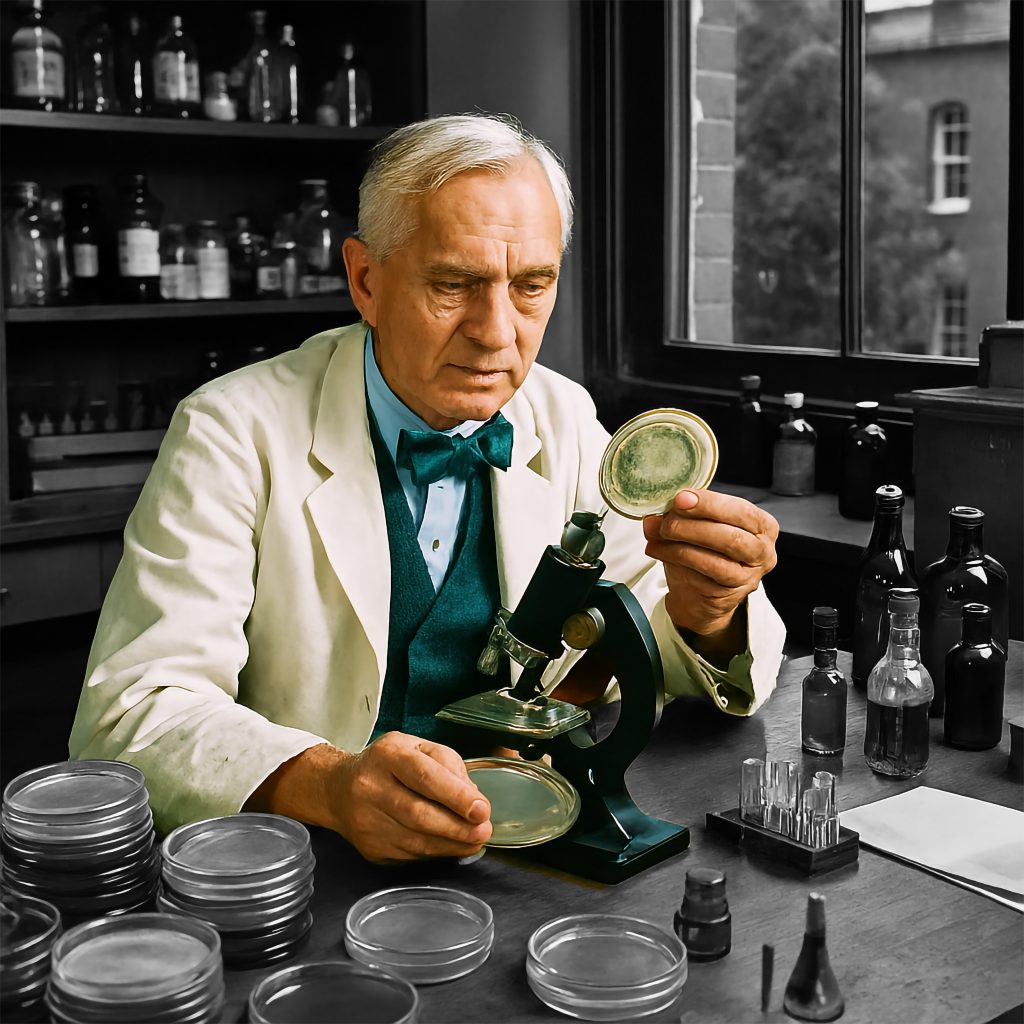
Penicillins (P, PCN or PEN) are a group of β-lactam antibiotics originally obtained from Penicillium moulds, principally P. chrysogenum and P. rubens. Most penicillins in clinical use are synthesised by P. chrysogenum using deep tank fermentation and then purified. Several natural penicillins have been discovered, but only two purified compounds are in clinical use: penicillin G (intramuscular or intravenous use) and penicillin V (given by mouth). Penicillins were among the first medications to be effective against many bacterial infections caused by staphylococci and streptococci. They are still widely used today for various bacterial infections, though many types of bacteria have developed resistance following extensive use. Penicillin was discovered in 1928 by the Scottish physician Alexander Fleming as a crude extract of P. rubens. Fleming’s student Cecil George Paine was the first to successfully use penicillin to treat eye infection (neonatal conjunctivitis) in 1930. The purified compound (penicillin F) was isolated in 1940 by a research team led by Howard Florey and Ernst Boris Chain at the University of Oxford. Fleming first used the purified penicillin to treat streptococcal meningitis in 1942. The 1945 Nobel Prize in Physiology or Medicine was shared by Chain, Fleming and Florey. We celebrate this remarkable discovery with an AI image of Fleming …


September 28
If you are interested what else happened on this day, please click on the calendar or press the button below: